
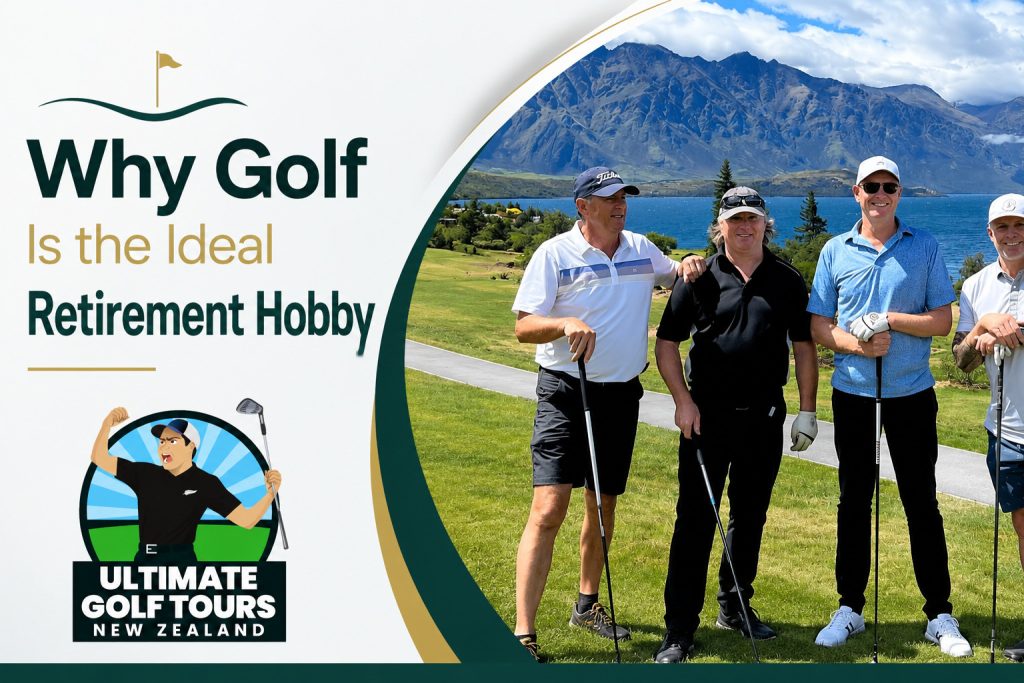
Golf for retirees offers something few retirement activities can really match: regular exercise, time outdoors, a bit of mental challenge, and genuine social connection. Retirement brings more freedom, sure, but it also reshuffles daily routines, social circles, and the everyday opportunities to stay active that a working life used to provide almost by accident. Golf tends to fill that gap without demanding the kind of intensity a lot of other sports do.
New Zealand makes the hobby even more appealing. Between relaxed local clubs and genuinely renowned championship layouts, golfers can pick courses that actually suit their fitness, experience, and preferred pace. For those weighing up retirement with golf course access nearby, living close to good facilities can turn the occasional round into something closer to a weekly habit.
Why Is Golf Good For Retirees?
Golf keeps the body moving without putting the same strain on joints that high-impact sports do. A full round can rack up several kilometres of walking, and when longer distances get harder, players can simply switch to a cart instead.
Regular play tends to support:
- Cardiovascular fitness through steady walking
- Balance and coordination through the golf swing
- Muscle strength through repeated controlled movement
- Mobility through walking, bending, and rotating
- Outdoor activity that doesn’t demand a training schedule
The routine itself can flex, too. Nine-hole rounds, carts, lighter bags, shorter practice sessions – golf bends to whatever fitness level someone’s at, rather than the other way round.
How Does Golf Keep Your Mind Active?
Golf asks for constant decision-making. Distance, wind, lie, hazards, club selection, where the next shot needs to land – all of it demands attention, shot after shot.
That mental side gives golf wellness a dimension that goes well beyond the physical exercise. Keeping score, reading greens, remembering how a course plays, adjusting to conditions that change mid-round – none of that happens on autopilot.
There’s also always something left to learn. A golfer can spend years refining technique, working out smarter course management, or just finding a better way to play a hole they’ve played a hundred times before.
Can Golf Improve Social Life After Retirement?
Retirement often means less everyday contact with colleagues and the professional networks people are used to. A golf club can quietly step into that gap, offering a new social routine that doesn’t need a formal introduction to get going.
Weekday rounds tend to suit retirees particularly well, since the pace is usually slower and there’s more room for actual conversation between shots. Club competitions, casual games, the odd social event – all of it creates chances to meet people with similar interests, without much effort involved.
For couples, golf can turn into a shared hobby rather than something one partner does alone. Families can bring younger generations into the game too, which gives everyone another reason to spend time together.
Is Golf Suitable For Senior Travellers?
Golf can turn retirement into a genuine excuse to explore somewhere new. Golf travel for seniors lets players combine the sport they love with accommodation, sightseeing, food, and a proper taste of local culture, rather than treating travel and golf as separate things.
New Zealand suits this kind of travel especially well, given how much variety its golfing regions offer. Retirees can move between coastal courses, parkland layouts, and resort facilities while still keeping the itinerary manageable rather than exhausting.
For travellers who’d rather things were arranged for them, New Zealand senior golf tours can take most of the legwork out of coordinating tee times, accommodation, transport, and equipment.
What Should Retirees Look For In A Golf Holiday?
Comfort and pace matter every bit as much as the quality of the courses themselves. Before booking senior golf holidays, it’s worth thinking through:
- Course walking requirements and cart availability
- Transfer times between accommodation and courses
- Hotel accessibility and convenient facilities
- How many rounds are actually planned during the trip
- Time set aside for rest and sightseeing
- Weather conditions during the chosen season
A properly planned itinerary should leave room to enjoy the destination itself, rather than turning every day into a sprint between tee times.
Why Choose Golf As A Long-Term Retirement Activity?
Unlike a lot of hobbies, golf grows and shrinks with you. Players can change tees, use carts, play fewer holes, or adjust the schedule without ever having to give the game up entirely.
That flexibility is exactly what makes retirement activities like golf so sustainable over the long run. A round can be competitive one week and purely social the next – and the goal itself can shift too, from chasing a lower handicap to simply enjoying a walk with friends.
For anyone considering retirement with golf course access close by, that kind of accessibility can become a real lifestyle advantage. The course stops being just somewhere to play and becomes part of a regular routine, and a bit of a community too.
Make Golf Part Of Your Retirement Travel
Golf gives retirees a rare mix of movement, mental engagement, friendship, and travel, all rolled into one. New Zealand adds another layer on top of that, with courses and landscapes that make every round feel a little different from the last.
If you’d like to combine well-planned golf for retirees with comfortable travel and carefully chosen courses, Ultimate Golf Tours New Zealand can help build an itinerary around your preferred pace and playing goals. Have a look at what’s possible, and start planning a golf journey that gives your retirement more time on the fairways.
FAQs
Is golf a good retirement activity for people with average fitness levels?
Yes. Golf lets retirees adjust walking distance, use carts, and pick courses suited to their fitness and comfort – nobody has to force it.
How often should retirees play golf for regular physical activity?
One or two rounds a week tends to provide consistent movement while still leaving enough recovery time between games.
Are New Zealand golf tours suitable for older international golfers?
Yes. A well-planned itinerary can include manageable transfers, comfortable accommodation, appropriate courses, and flexible scheduling built around senior golfers.
Can couples enjoy golf together during retirement?
Yes. Couples can play together recreationally, try new courses, and pair golf with sightseeing, dining, and other shared activities along the way.