
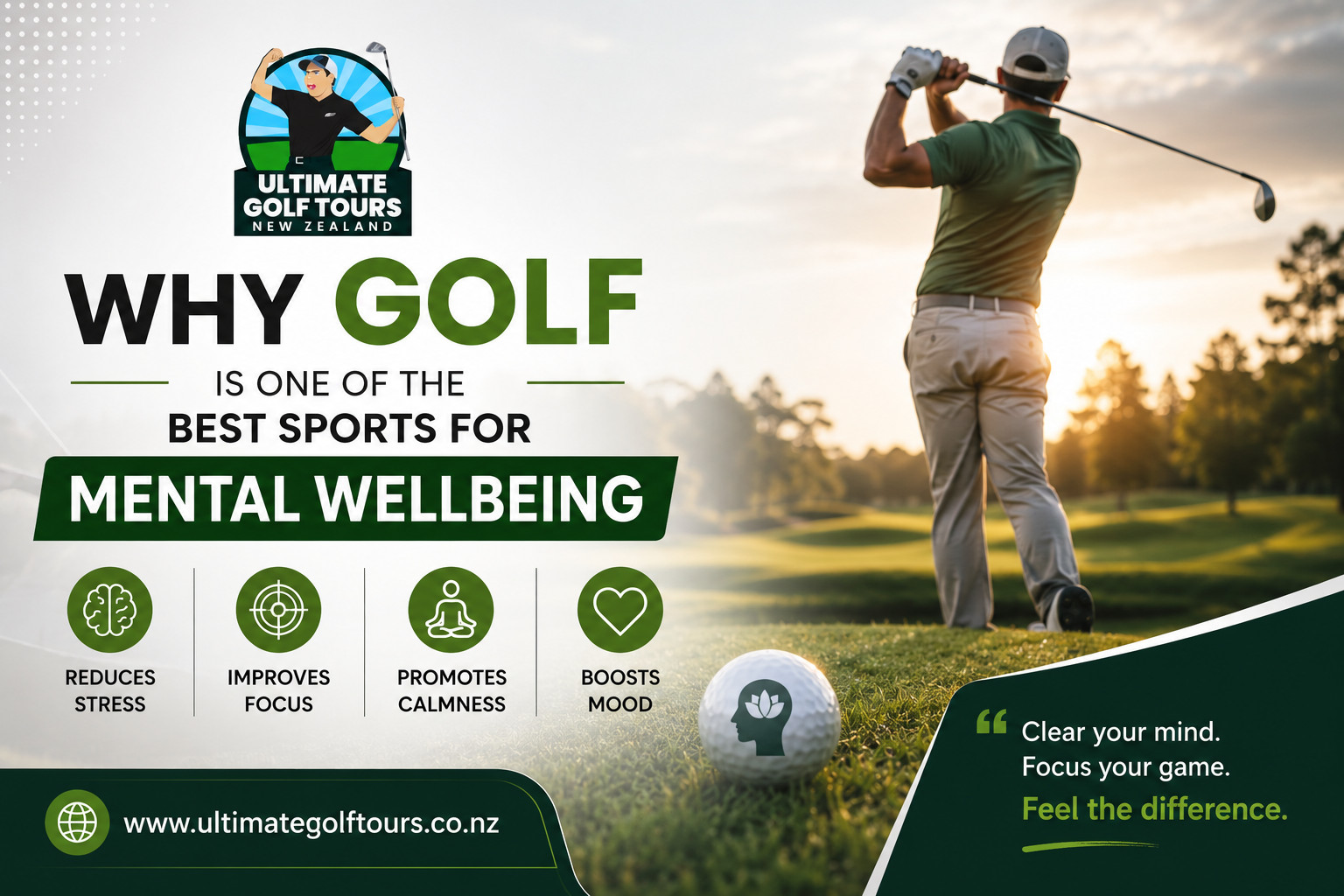
The benefits of playing golf go well beyond a smoother swing or a lower handicap. The game gives you time to slow down, think clearly, and spend a few hours outdoors, away from whatever’s been pulling at your attention that day. It’s not a fast sport, and that’s exactly the point – it rewards focus, patience, and the kind of unhurried conversation that’s harder to come by elsewhere.
Whether you play every weekend or only during the occasional round on relaxing golf holidays, most golfers notice the same thing: it does something for both body and mind. Walking an open course, lining up a shot, talking with the people you’re playing alongside – it all adds up. That’s part of why so many people are drawn into the golf lifestyle, seeking out destinations where great courses meet genuinely memorable travel.
How Does Golf Help Reduce Everyday Stress?
Modern life doesn’t leave much room to properly switch off. Golf more or less forces the issue. For four or five hours, your attention is on the course – not the inbox, not the deadline, not whatever’s waiting at home. Reading the green, judging the wind, working out distance: each shot asks for a bit of concentration, and that steady demand has a way of quieting everything else down.
Plenty of regular players will tell you golf for stress relief isn’t just a nice idea – it becomes part of why they keep coming back, because staying present through a round is oddly difficult to replicate anywhere else.
Why Does Spending Time Outdoors Improve Mental Wellbeing?
A lot of the health benefits of golf simply come down to where it’s played. There’s no indoor substitute for open fairways, coastal dunes, or a quiet stretch of parkland. Walking through that kind of landscape is a genuine break from city noise and screens, and it doesn’t take long to feel the difference.
Time outdoors tends to:
- Ease stress and mental fatigue
- Lift mood through steady, low-impact movement
- Sharpen concentration
- Bring on a stronger sense of calm
Ask around, and you’ll find plenty of golfers who say the course itself feels just as restorative as the round they played on it.
Can Golf Build Emotional Resilience?
Every round throws something at you. A bad drive, a missed putt, an awkward lie in the rough – any of these can shift the whole mood of a game. What separates a frustrated golfer from a composed one is how quickly they can let it go and turn to the next shot instead of replaying the last one.
Do that often enough, and it becomes a habit – one that shows up as:
- Patience under pressure
- Steadier emotional control
- Sharper decision-making
- More confidence after a setback
None of that stays on the course, either. Most golfers will admit these habits quietly follow them home.
Why Is Golf Such a Social Sport?
Golf has a way of bringing people together that few other sports manage. Friends, family, colleagues, strangers you’ve just met on the first tee – everyone plays at roughly the same pace, and the handicap system means players of very different abilities can still enjoy the same round together. Nobody’s left out because they’re not quite good enough yet.
That social layer matters more than people expect. Conversation, shared frustration, the odd celebratory high five – it all chips away at isolation and builds the kind of connection that’s genuinely good for mental health.
For a lot of people, the friendships that grow out of the golf lifestyle end up mattering just as much as the golf itself.
Why Are Golf Holidays Good for Mental Health?
A change of scenery tends to do wonders, and golf gives you a good excuse to actually go looking for one. Relaxing golf holidays pair decent golf with scenic surroundings, comfortable places to stay, and a proper break from whatever’s usually demanding your time. Rather than cramming in activities back to back, the pace slows right down – which turns out to be most of the point.
New Zealand, in particular, has built a reputation for this. Golfers head there for the courses, sure, but also for the coastline, the native forest, the sense of quiet that follows you from one fairway to the next. Pair that with golf travel New Zealand, and you get world-class golf alongside all the wellbeing that comes from simply being out in that kind of landscape.
Is Golf Suitable for Every Stage of Life?
One of golf’s real strengths is how little it asks of you in terms of age or fitness. People keep playing well into their seventies and beyond, because the game bends to whoever’s playing it. Walk it if you can, take a buggy if you’d rather – either way, you get movement without the kind of strain that rules out a lot of other sports as people get older.
That flexibility is exactly why so many golfers hold onto the health benefits of golf for decades, staying active and socially connected long after other hobbies have fallen away.
Conclusion:-
The benefits of playing golf reach well past the scorecard. Fresh air, gentle movement, good company, and the simple discipline of focusing on one shot at a time – together, they add up to something genuinely good for the mind. Not many sports manage all of that at once.
Whether you’re chasing golf for stress relief, planning relaxing golf holidays, or just easing into the wider golf lifestyle, there’s real value in the game that has nothing to do with your handicap.
If golf travel New Zealand is on your radar, Ultimate Golf Tours New Zealand puts together trips built around exactly this – outstanding courses, striking landscapes, and the unhurried pace that makes golf one of the more rewarding things you can do for both body and mind.
FAQs
Does golf really help reduce stress levels?
Yes. Between the concentration it demands, the time outdoors, and the steady physical movement, most players find it genuinely eases stress and lifts overall mental wellbeing.
Why are relaxing golf holidays good for mental health?
They bring together good golf, peaceful surroundings, and real distance from your usual routine – which gives people the chance to recharge on more than one level.
Can beginners experience the health benefits of golf?
Absolutely. None of it depends on skill level. The activity, the social side, the mental focus – beginners get just as much out of it as anyone else.
Why is golf travel in New Zealand popular among international golfers?
Championship-level courses, dramatic scenery, and a relaxed pace of life – that combination is hard to find anywhere else, and it’s why so many golf trips end up refreshing in more ways than one.